If you or someone you love is living with a significant disability, you’ve probably heard the term SDA in planning meetings. SDA’s purpose-built homes, better design, and more independence sound promising. But here’s the part nobody explains clearly enough: SDA funding isn’t handed out to every NDIS participant. It’s reserved for a specific group of people with specific needs, and the NDIA assesses every application against a defined SDA eligibility criteria.
So, who qualifies for SDA funding, exactly? That’s the question this guide answers.
What Is SDA?
Specialist Disability Accommodation (SDA) refers to purpose-built or specially modified housing designed for people with significant and permanent disabilities who require specialist housing solutions.
Unlike Supported Independent Living (SIL), which funds support workers to assist with daily activities, SDA funding contributes towards the cost of the specialised home itself.
These homes are designed to improve:
- Safety
- Accessibility
- Independence
- Quality of life
- Long-term support outcomes
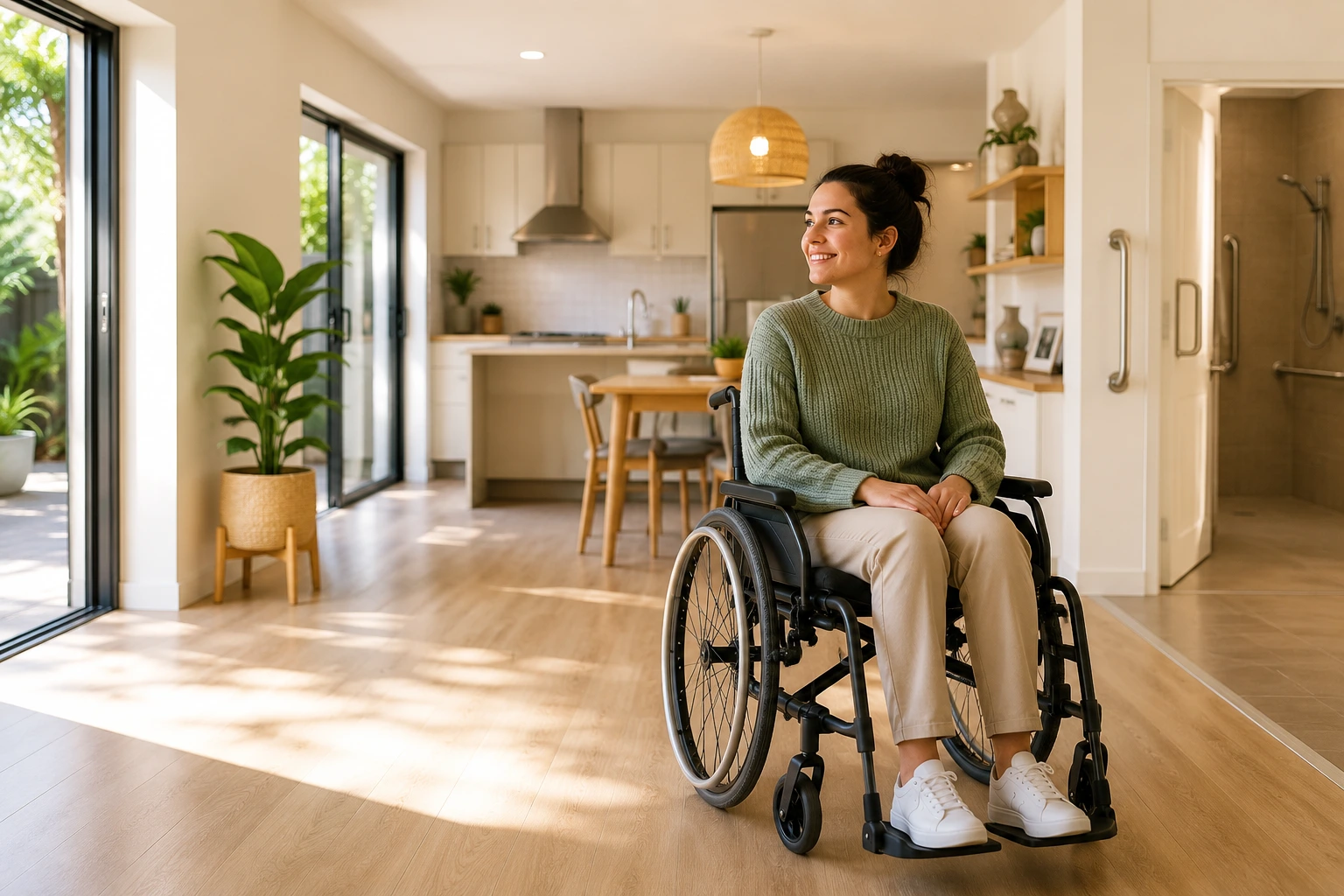
Features may include:
- Wheelchair-accessible layouts
- Ceiling hoists
- Wider doorways
- Automated doors
- Smart home technology
- Emergency backup systems
- Accessible kitchens and bathrooms
- Reinforced structural design for high support needs
Who Qualifies for SDA Funding Under the NDIS?
Who qualifies for SDA funding comes down to 3 things:
- Your disability
- The intensity of your support needs
- Whether ordinary housing options can realistically meet their needs
To be considered, a participant generally needs to show:
They have a significant and permanent disability that results in extreme functional impairment or very high support needs
Their current or available housing cannot reasonably be modified to support them safely
They require significant support in most areas of daily life, from personal care to mobility to safety supervision
SDA housing would genuinely improve their independence, safety, or quality of life compared to remaining in an unsuitable home
This is the heart of NDIS SDA eligibility. It isn’t about wanting nicer housing; it’s about demonstrating that a purpose-built, accessible home is a genuine and necessary part of managing your disability.
Do You Need to Be an NDIS Participant?
Yes. If you’re wondering who is eligible for SDA, the starting point is simple: you must be an approved NDIS participant with an active plan. SDA funding is added to that plan as a separate support category once the NDIA agrees you meet the criteria.
If you’re not yet a participant, your first step is to become eligible for the NDIS itself, which is a separate process based on your age, residency status, and whether your disability meets the Scheme’s access requirements
What Level of Support Needs Actually Qualifies?
The NDIA is specifically looking for evidence that the person needs help with almost every physical task, faces serious safety risks in a standard home, or relies on specialised equipment that a typical house simply can’t accommodate.
Conditions commonly associated with SDA funding eligibility include:
- high-level spinal cord injuries
- severe cerebral palsy
- advanced muscular dystrophy
- significant acquired brain injury
- complex multiple disabilities involving both physical and cognitive impairment
That said, eligibility is never based on a diagnosis alone; it’s based on how that condition affects daily function and housing needs.
What Evidence Do You Need to Prove SDA Participant Eligibility?
Evidence makes or breaks an SDA application. The NDIA typically wants to see:
- A current functional capacity assessment from an occupational therapist
- Reports from treating specialists outlining the permanence and severity of the disability
- A Home and Living supporting evidence form, usually completed with your support coordinator
- Documentation explaining why your current home is unsafe or unsuitable, and why modifications wouldn’t solve the problem
Important: The stronger and more specific your evidence, the smoother your path to approval. Vague or outdated reports are one of the most common reasons applications are rejected.
Who Isn’t Eligible for SDA?
Generally, you’re unlikely to qualify if:
Your support needs can be reasonably met through home modifications or SIL in a standard property
Your disability, while genuine, doesn’t reach the threshold of extreme functional impairment or very high support needs
You’re seeking SDA purely for lifestyle preference rather than a demonstrated functional need
You don’t yet have an NDIS plan or haven’t had your housing and support needs formally assessed
How SDA Design Categories Connect to Eligibility
Homes are built across 4 categories, and the category you’re assessed for depends entirely on your unique support needs:
- Improved Liveability: Designed if you’re living with sensory, intellectual, or cognitive impairments and benefit from better internal layout and design
- Fully Accessible: Ideal if you’re having a significant physical impairment and need step-free access and accessible fittings throughout
- Robust: If you’re managing complex behaviours of concern and require sturdier, more resilient building materials and safety features
- High Physical Support: If you require the most extensive physical support needs, often including ceiling hoists, emergency power backup, and 24/7 care integration
Your approved design category directly shapes the SDA funding in your NDIS plan. It’s always a good idea to talk openly with your support coordinator or OT about which features genuinely reflect your day-to-day reality.
How to Qualify for SDA Funding: The Practical Steps
Knowing the criteria is one thing; actually working through the process is another. Here’s how to qualify for SDA funding in practice:
- Confirm your NDIS plan status. You need to be an active participant before SDA can even be considered.
- Get a functional capacity assessment. This is usually the anchor document for your entire application.
- Work with your support coordinator or nurse navigator. They’ll help translate clinical information into the language the NDIA uses.
- Gather supporting reports from specialists, GPs, and allied health professionals; the more consistent the picture, the stronger your case.
- Submit your Home and Living request through your planner or by requesting a plan review.
- Prepare for a wait. Assessments can take time, particularly if the NDIA requests further information, so patience and thorough documentation both matter.
What Happens if my SDA Application is Rejected?
If your application is knocked back, it isn’t necessarily the end of the road. You can request an internal review or provide additional evidence, and in more complex cases, escalate to the Administrative Review Tribunal (ART) within 28 days.
What Happens Once You’re Approved
Once SDA is added to your plan, the NDIA pays your registered SDA provider directly to cover the building and maintenance costs of your home.
Note: You’ll still be responsible for a reasonable rent contribution and everyday living costs, such as food, bills, and personal items.
It’s also worth remembering that SDA funding sits separately from your Support Coordination, Core Supports, and Capacity Building budgets, so approval in one area doesn’t automatically change funding in another.
Get the SDA Support You Need with Love Home Nursing
Working out who qualifies for SDA funding can feel overwhelming when you’re doing it alone, reading legislation, chasing reports, trying to translate clinical language into what the NDIA wants to hear. You don’t have to piece it together by yourself.
At Love Home Nursing, our registered nurse–led team works alongside NDIS participants and families every day, helping build the kind of clear, well-documented case that gives an SDA application its best chance. We understand complex nursing needs, high support requirements, and what genuine evidence looks like from an assessor’s point of view because we’ve sat across the table from families going through exactly this.
If you’re exploring NDIS referrals, ready to start your participant intake, or simply want to talk through your situation with someone who understands complex care, get in touch with our team.