Finding a home that’s actually built around your needs, your safety and your independence shouldn’t feel like an impossible search. For thousands of Australians living with disability, it has been, until NDIS Specialist Disability Accommodation changed what’s possible. Here’s everything you need to know about SDA.
What is Specialist Disability Accommodation (SDA)?
Specialist Disability Accommodation is NDIS-funded housing that’s purpose-built or specially modified for people living with extreme functional impairment or very high support needs.
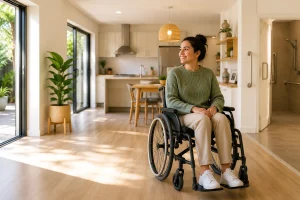
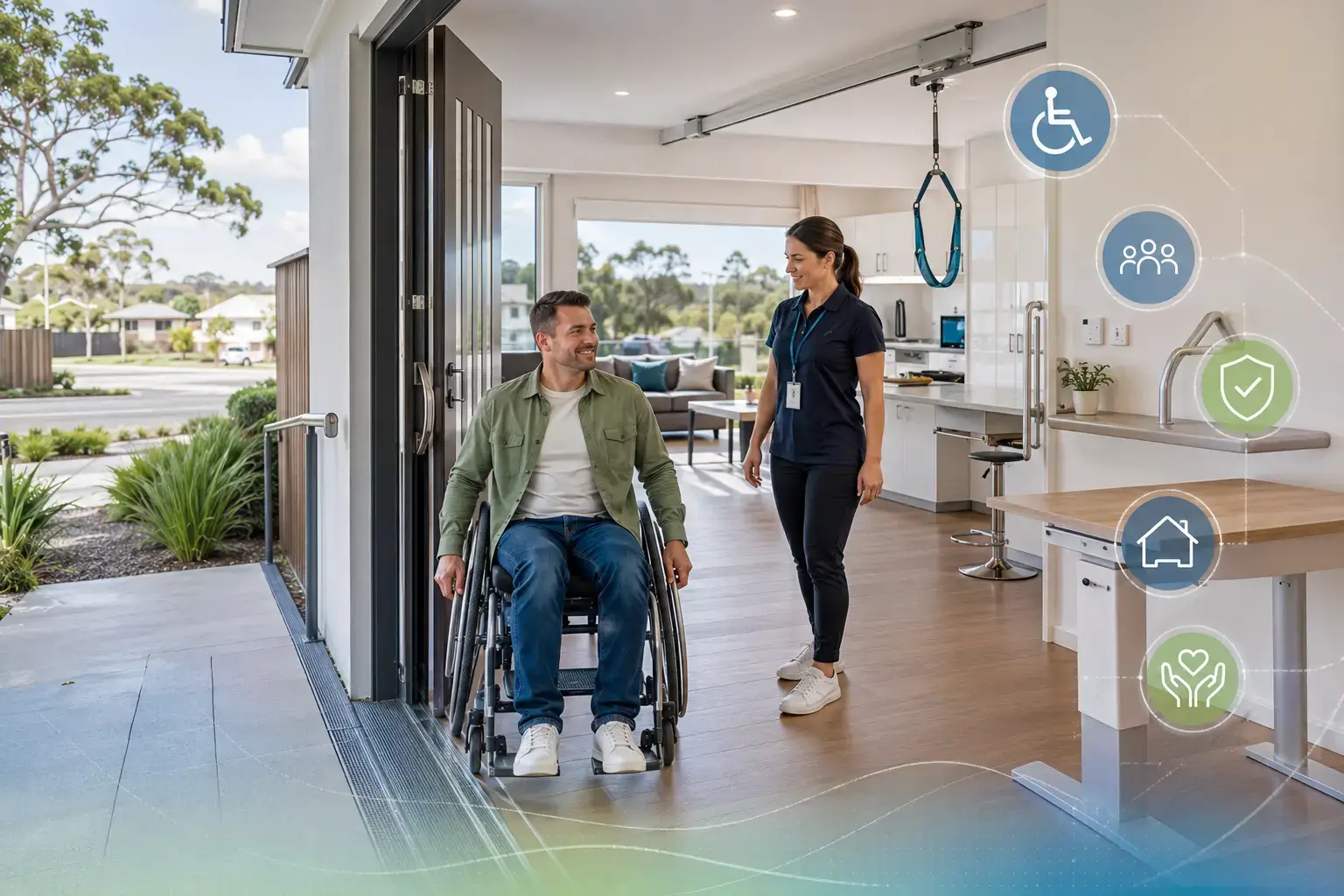
Think wider doorways that a wheelchair can turn through comfortably, ceiling hoists installed during construction, emergency backup power for essential medical equipment, and kitchens and bathrooms that don’t require a person to be lifted or squeezed into position. That’s the everyday reality SDA aims to create.
It’s worth being clear about what SDA is not.
SDA pays for the bricks, fittings and design of the dwelling itself. It doesn’t fund support workers, personal care, or day-to-day assistance; that comes under a separate NDIS support called Supported Independent Living (SIL).
Many participants use SDA and SIL together: SDA provides the accessible home, SIL provides support for the people who support them within it.
Who is Eligible for SDA?
Not every NDIS participant qualifies. SDA exists for a small group, around 6% of participants, whose needs can’t be met in mainstream or modified private housing.
You may meet SDA eligibility if you:
- Have extreme functional impairment (e.g. high-level spinal cord injury, acquired brain injury, severe neurological condition)
- Need very high daily support that your current home can’t safely accommodate
- Have complex behavioural needs that risk harm to yourself, others, or the property
- Have allied health evidence showing specialist housing would reduce your support needs or risk
Important: Eligibility isn’t assumed just because someone has a disability or a large support package. The NDIA looks closely at functional impairment, existing housing risks, and whether a less intensive option, like home modifications or SIL alone, could meet the same need first.
Benefits of Living in an SDA
Beyond the funding mechanics, SDA changes everyday life in ways that matter. The main benefits include:
- Greater independence: purpose-built layouts reduce reliance on others for basic daily tasks
- Improved safety: features like ceiling hoists and step-free access lower the risk of falls and injury
- Better support delivery: carers and support workers can do their job safely and effectively, without makeshift workarounds
- Long-term suitability: homes are built to last, avoiding the cycle of temporary fixes and repeat modifications
- Community connection: accessible design makes it easier to stay engaged with family, friends, and local activities
- Choice and control: participants can choose their location, housemates, and provider, rather than accepting whatever’s available
In short, SDA isn’t just about the building. It’s about giving people the freedom to live life on their own terms.
The Four SDA Design Categories
Every enrolled SDA dwelling in Australia falls into one of four categories under the official SDA Design Standard. Here’s what each one covers.
| Design Category | Best Suited For | Typical Features |
| Improved Liveability | Sensory, intellectual or cognitive impairment | Better visual contrast, tactile cues, single-storey layout, minimal stairs |
| Fully Accessible | Significant physical impairment, wheelchair users | Step-free access, wheelchair-accessible kitchen and bathroom, wider doorways |
| Robust | Complex behavioural needs that may risk self, others or property | Reinforced fittings, durable materials, secure sightlines, safe egress |
| High Physical Support | Profound physical and medical support needs | Ceiling hoists, emergency power backup, assistive technology, wider circulation space |
Note: A person’s needs may span more than one SDA design category. For example, someone may require both a Fully Accessible home for wheelchair access and High Physical Support features such as ceiling hoists. A comprehensive OT assessment helps identify the most appropriate combination of housing features.
SDA Building Types
Beyond design category, SDA homes are available in different building types to suit a range of needs and living preferences, including:
- Apartments
- Villas
- Duplexes
- Townhouses
- Standalone houses
- Group homes for shared living
Keep in mind:
- Studio-style accommodation is not recognised under the current SDA Design Standard.
The combination of SDA design category and building type determines which properties you may be eligible for and how the NDIS prices that accommodation.
How SDA Funding Works
SDA sits within the Capital Supports budget of an NDIS plan, under Support Category 06. It’s paid directly to a registered SDA provider to cover the cost of building, maintaining and enrolling the accessible dwelling.
Important: SDA funding does not cover your entire cost of living there.
Participants still pay a Reasonable Rent Contribution, generally calculated using a formula tied to the Disability Support Pension and Commonwealth Rent Assistance rates. This contribution is reviewed twice yearly, so it’s worth checking the current NDIS Pricing Arrangements for Specialist Disability Accommodation for the exact figure that applies to your plan, rather than relying on a number that may already be out of date by the time you read this.
The SDA Assessment and Requirements Process
Getting SDA approved typically follows this path:
- Referral and initial conversation with your NDIS planner or Local Area Coordinator about your housing challenges
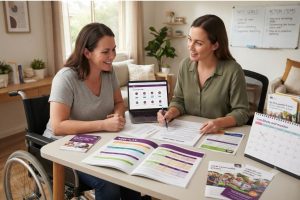
- Occupational therapy or specialist assessment, usually including a Housing Needs Report that documents your functional impairment, safety risks in your current home, and recommended design category
- Supporting evidence from treating professionals, which strengthens the case for why mainstream housing or modifications aren’t sufficient
- NDIA review, where the agency assesses whether SDA requirements are met and, if approved, includes SDA funding in your plan under the relevant category and building type
- Finding and moving into enrolled SDA housing through a registered SDA provider once funding is confirmed
This process can take time, and incomplete evidence is one of the most common reasons applications stall. Working with providers who understand both the NDIS system and your day-to-day support needs makes a genuine difference here.
Choosing the Right SDA Provider
Once SDA funding is approved, the next decision is just as important: who you live with, and who manages the property.
A registered SDA provider should be:
- Transparent about vacancy rates
- Compliant with the SDA Design Standard
- Willing to show you the actual dwelling (not just plans)
- Clear on how rent contributions and maintenance are handled
It’s worth visiting a property in person, talking to current residents where possible, and asking how the provider works alongside your SIL or support team rather than in isolation from them.
FAQ
What is Specialist Disability Accommodation (SDA)?
Specialist Disability Accommodation (SDA) is NDIS-funded housing designed for eligible participants with extreme functional impairment or very high support needs. These homes include specialised accessibility features that improve safety, independence, and quality of life.
Who is eligible for Specialist Disability Accommodation?
You may be eligible for SDA if you are an NDIS participant with extreme functional impairment or very high support needs and standard housing cannot safely or effectively meet your daily living requirements. Eligibility is determined by the NDIA based on assessments and supporting evidence from healthcare professionals.
Does SDA funding pay for support workers?
No. SDA funding only covers the cost of specialist housing. Support workers, personal care, and daily living assistance are funded separately through other NDIS supports, such as Supported Independent Living (SIL) or Core Supports.
What is the difference between SDA and SIL?
SDA funds the accessible home, while Supported Independent Living (SIL) funds the support services provided inside the home. Many eligible NDIS participants receive both supports to help them live safely and independently.
What types of homes are available under Specialist Disability Accommodation?
Specialist Disability Accommodation includes apartments, villas, duplexes, townhouses, standalone houses, and shared group homes. The most suitable option depends on your approved SDA design category, support needs, and living preferences.
How do I apply for Specialist Disability Accommodation?
To apply for SDA, you’ll need an NDIS plan, an Occupational Therapy Housing Needs Assessment, supporting medical evidence, and approval from the NDIA. Once SDA funding is included in your plan, you can choose an enrolled SDA property that matches your approved design category.
Can I choose where I live with SDA funding?
Yes. If you are approved for SDA, you can choose an enrolled SDA property that suits your support needs, preferred location, and lifestyle, subject to availability and your approved funding.
Do I have to pay rent if I live in Specialist Disability Accommodation?
Yes. Most SDA participants pay a Reasonable Rent Contribution, which is generally based on a portion of their Disability Support Pension and any Commonwealth Rent Assistance they receive. SDA funding covers the specialist housing costs, not your personal living expenses.
How Love Home Nursing Can Help
Finding the perfect Specialist Disability Accommodation NDIS is a major milestone, but having the right care team in place is what truly turns a house into a home. At Love Home Nursing, we partner with NDIS participants and their families across Australia, providing personalised disability support and complex nursing care that fits seamlessly with your SDA and SIL arrangements.
If you’re a participant ready to discuss your individual care needs, fill out our participant intake form. If you’re a coordinator, support planner, or allied health professional, we also accept NDIS referrals directly.
No matter where you are in your SDA journey, reach out to Love Home Nursing to discuss your support needs and find out how we can help you make the most of your new home.