
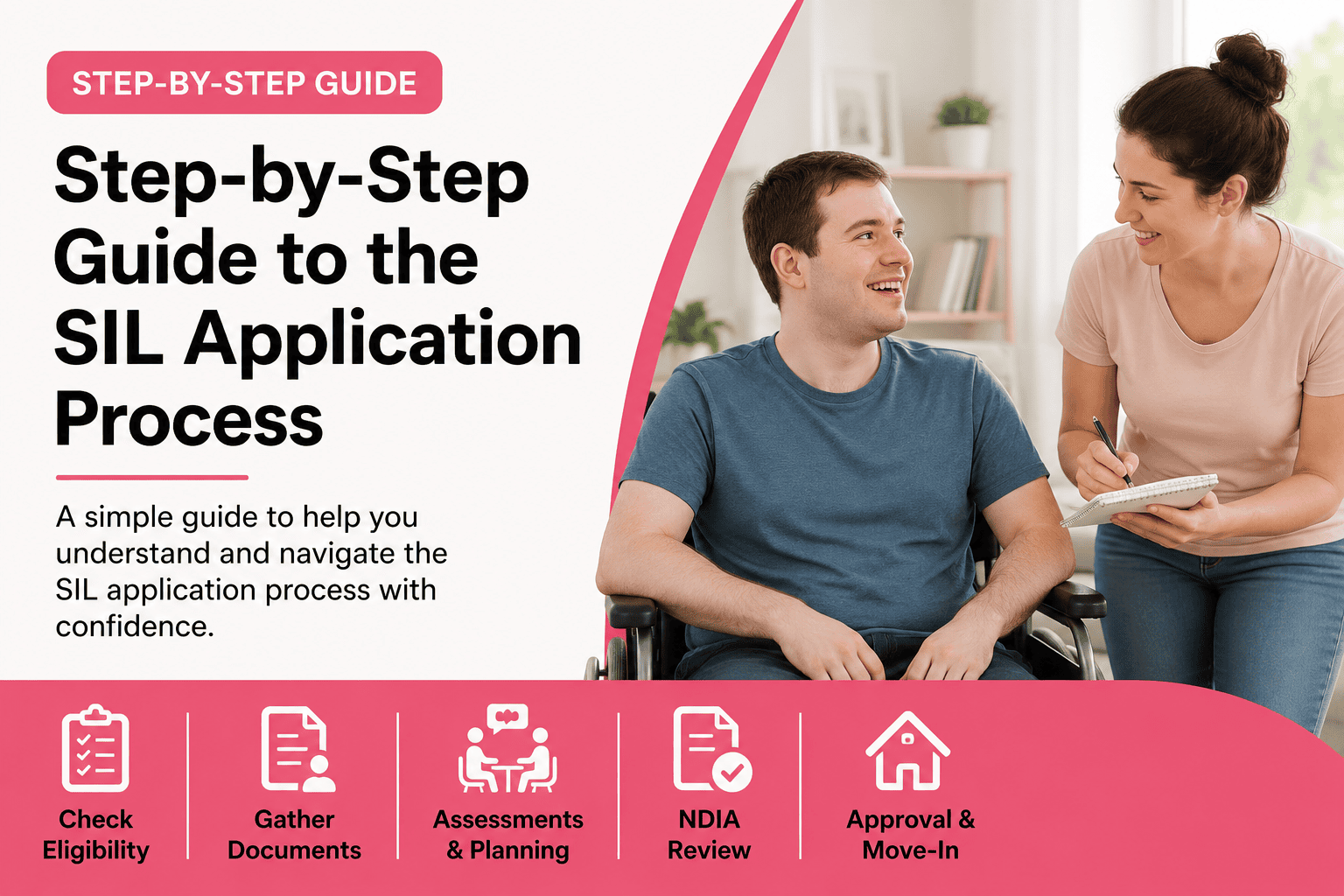
Applying for Supported Independent Living (SIL) through the NDIS can feel overwhelming at first. Many participants and families are unsure where to begin, what documents are needed, or how long the process takes.
The good news is that understanding the SIL application process becomes much easier when broken down into clear steps. This guide explains exactly how the SIL process works, from determining eligibility to moving into a SIL home.
Before starting your SIL journey, it is also helpful to understand how much SIL costs under the NDIS and what funding may cover.
What is Supported Independent Living (SIL)?
Supported Independent Living (SIL) is an NDIS-funded support designed for participants who need help with daily living tasks while living more independently.
SIL funding can include support with:
- Personal care
- Meal preparation
- Household tasks
- Medication management
- Building life skills
- Community participation
- Overnight support
- Behavioural support needs
Who Can Apply for SIL?
SIL is generally designed for participants who:
- Have higher daily support needs
- Need regular assistance at home
- Require help with daily living activities
- Need overnight or 24/7 support
- Want to build independent living skills
Step-by-Step SIL Application Process
Step 1: Understand Your Support Needs
The first step is identifying the type of daily support required. This may include help with personal care, cooking, medication management, mobility, communication, or supervision.
Step 2: Speak With Your Support Coordinator or NDIS Planner
Your support coordinator or NDIS planner can help determine whether SIL may be suitable for your circumstances and guide you through the next steps.
Step 3: Complete Functional Capacity Assessments
The NDIA usually requires professional assessments to understand your support needs properly.
- Occupational Therapy (OT) Assessment
- Functional Capacity Assessment (FCA)
- Behaviour Support Assessment
- Medical Reports
Step 4: Explore SIL Providers and Housing Options
Participants can begin researching SIL providers and available accommodation options while assessments are being completed.
| Consideration | Why It Matters |
|---|---|
| Support quality | Impacts daily experience |
| Accessibility | Supports safety and mobility |
| Shared living arrangements | Affects social compatibility |
| Location | Improves access to community and family |
Step 5: SIL Provider Creates a Roster of Care
A SIL provider develops a roster of care outlining daily support requirements, staffing ratios, overnight support, and supervision needs.
Step 6: Submit SIL Funding Evidence to the NDIA
Once all reports and support plans are completed, the evidence is submitted to the NDIA for review and funding consideration.
Step 7: NDIA Reviews the Application
The NDIA assesses whether SIL funding is considered reasonable and necessary based on support needs, safety requirements, and independence goals.
Step 8: SIL Funding Approval
If approved, SIL funding is added to the participant’s NDIS plan and housing arrangements can move forward.
Step 9: Finding the Right SIL Home
Participants may begin touring homes, meeting housemates, and reviewing support compatibility before finalising accommodation.
Step 10: Transition and Move-In
The final stage includes moving into the SIL home, introducing support workers, building routines, and starting independence-focused supports.
How Long Does the SIL Application Process Take?
The SIL process can take several months depending on assessment availability, evidence quality, housing options, and NDIA review timelines.
Tips to Improve Your SIL Application
- Gather strong supporting evidence early
- Work with experienced SIL professionals
- Clearly explain daily challenges
- Focus on independence goals
- Understand your SIL funding and support options
Final Thoughts
The SIL application process may seem complicated initially, but understanding each step makes the journey easier and more manageable.
From assessments and evidence gathering to provider matching and move-in planning, every stage is designed to support participants in building greater independence and quality of life.
If you are still exploring funding and budgeting, you can also read our detailed guide on how much SIL costs under the NDIS .
Frequently Asked Questions
How do I know if I qualify for SIL?
Participants with higher daily support needs may qualify for SIL funding under the NDIS.
Can SIL funding be denied?
Yes. The NDIA may deny SIL funding if the evidence provided does not demonstrate reasonable and necessary support needs.
Can I choose my SIL provider?
Yes. Participants generally have choice and control when selecting SIL providers and housing arrangements.